
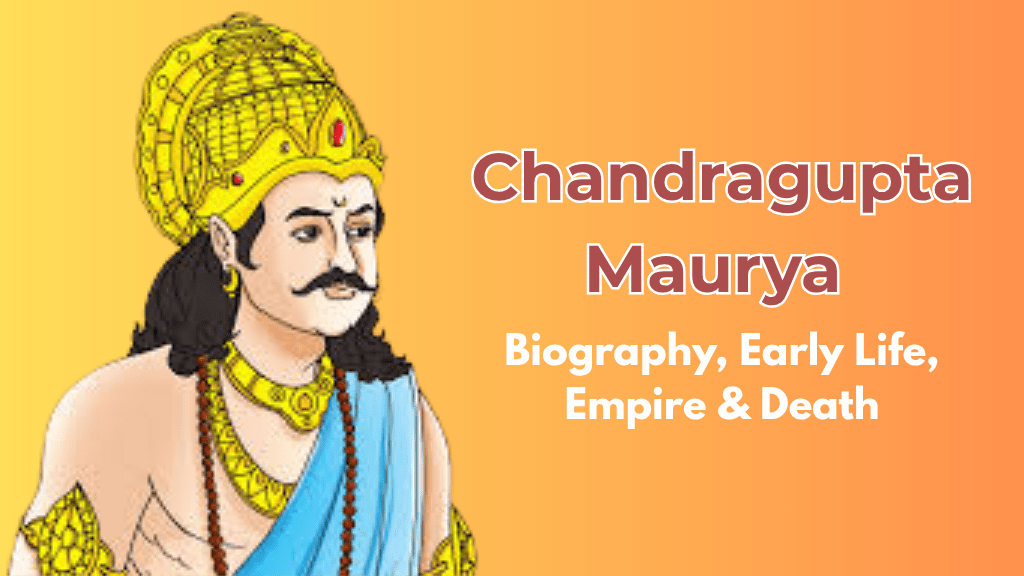
Introduction – Chandragupta Maurya – Founder of the Mauryan Empire
Chandragupta Maurya was one of the greatest and most powerful rulers of ancient India. He is regarded as the founder of the Mauryan dynasty and the Mauryan Empire. He was the first emperor to unify a vast expanse of India under a strong central administration and establish a massive empire. His life story stands as an inspiring testament to struggle, diligence, leadership, and determination, chronicling his journey from humble beginnings to becoming a great emperor.
The history of Chandragupta Maurya is of immense significance to students preparing for competitive examinations. Questions related to him frequently appear in these exams—such as: Who was Chandragupta Maurya? Why is Chandragupta Maurya important? What was the era of Chandragupta Maurya? What is the history of the Mauryan Empire? and so forth.
In this blog, we will delve into the comprehensive biography of Chandragupta Maurya, covering his early life, the establishment of the Mauryan Empire, his reign, career, family life, death, and his enduring legacy. This information will prove highly beneficial for students of history as well as for those preparing for competitive examinations.
Who was Chandragupta Maurya?
Chandragupta Maurya was a great emperor, a skilled warrior, and a visionary ruler of ancient India, regarded as the founder of the Mauryan Empire and the progenitor of the Mauryan dynasty. He reigned from approximately 322 BCE to 298 BCE and established one of the largest and most powerful empires in ancient India. During his reign, India was, for the first time, unified under a strong central administration.
With the assistance of his mentor, Chanakya (Kautilya), Chandragupta Maurya defeated the Nanda dynasty, seized control of Magadha, and laid the foundation of the Mauryan Empire. Subsequently, he waged war against the Greek ruler Seleucus I Nicator; having defeated him, he expanded his empire to encompass northwestern India. Following this victory, his empire grew to become vast and immensely powerful.
Chandragupta Maurya was not merely a conqueror but also an astute administrator. He developed a robust administrative framework, a taxation system, a formidable army, and a sophisticated trade network, thereby rendering his empire economically and militarily exceptionally strong. For these reasons, he is revered in history as one of India’s greatest emperors.
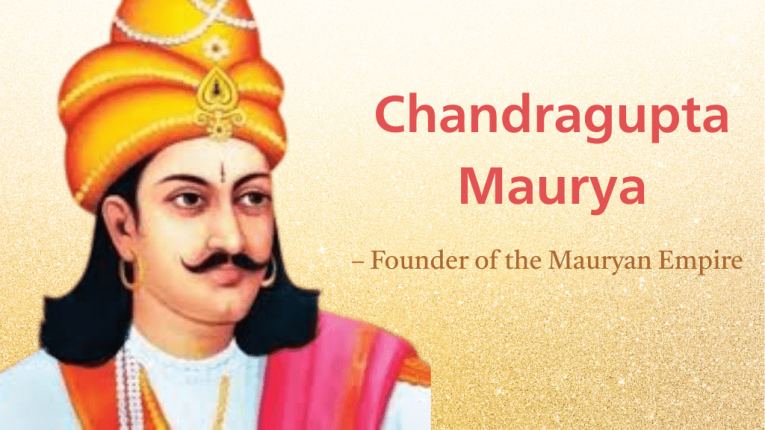
The Early Life of Chandragupta Maurya
Chandragupta Maurya’s early life was extremely humble, and his childhood was spent amidst difficult circumstances. According to historians, he is believed to have been born around 340 BCE. He was not born into a prominent royal lineage; rather, he was raised in an ordinary family. From his very childhood, he displayed traits of courage, leadership potential, and an ambition to achieve something great.
It is said that, on one occasion, the renowned scholar and mentor Chanakya (also known as Kautilya) took notice of the young Chandragupta and recognized within him the potential to become a great king. Subsequently, Chanakya took him under his wing and imparted instruction in politics, diplomacy, warfare, administration, military organization, and statecraft. Chanakya trained Chandragupta for several years, grooming him to become a powerful ruler.
This training was not limited merely to academic instruction; it also encompassed war strategies, plans for countering adversaries, and methods for strengthening the state. Chanakya’s objective was to dismantle the Nanda dynasty and establish a new, powerful empire—a mission for which he meticulously prepared Chandragupta Maurya.
Thus, Chandragupta Maurya’s early life was characterized by struggle, education, rigorous training, and arduous labor. This period proved to be the most pivotal phase of his biography, for it was during this very time that a humble boy embarked upon the journey to become a magnificent emperor.
The Era of Chandragupta Maurya
The reign of Chandragupta Maurya is considered one of the most significant and transformative periods in Indian history. His rule spanned approximately from 322 BCE to 298 BCE. During this period, major changes occurred in India’s political system, administration, military power, and economic status, leading to the establishment of a vast empire.
Chandragupta Maurya Period:
- 322 BCE – 298 BCE
Several significant events took place during this era that altered the course of Indian history. Foremost among them, Chandragupta Maurya defeated the Nanda dynasty, seized control of Magadha, and founded the Mauryan Empire. Subsequently, he defeated Greek rulers and armies in northwestern India, thereby expanding the boundaries of his empire.
During his reign, a robust centralized administrative system was developed, under which the taxation system, military, espionage network, and provincial administration were managed in a highly organized manner. This period also witnessed substantial growth in trade, agriculture, and industry, which bolstered the economic stability of the state.
Chandragupta Maurya also oversaw the development of roads, cities, irrigation systems, and other infrastructure within his empire, thereby facilitating trade and travel. Under his rule, India emerged—for the first time—as a strong and unified empire.
Thus, the era of Chandragupta Maurya is regarded as the dawn of a powerful, centralized empire in India—one that subsequently steered Indian history in a new direction.
Founder of the Mauryan Empire
Chandragupta Maurya is regarded as the founder of the Mauryan Empire—one of the largest and most powerful empires of ancient India. After defeating the ruler of the Nanda dynasty, he laid the foundation of this magnificent empire under the guidance of his mentor, Chanakya (Kautilya).
The capital of the Mauryan Empire was Pataliputra (present-day Patna), which served as a major hub for political, economic, and cultural activities during that era. Under the leadership of Chandragupta Maurya, the empire expanded rapidly and established its dominion over a vast expanse of the Indian subcontinent.
This sprawling empire encompassed:
- Magadha
- Punjab
- Certain regions of Afghanistan
- The entirety of Northern India
- Western India
- Several parts of Central India
Subsequently, Chandragupta Maurya defeated the Greek ruler Seleucus I Nicator, one of Alexander the Great’s generals. Following this victory, the boundaries of his empire expanded even further, thereby rendering the Mauryan Empire even more formidable.
By virtue of his courage, leadership prowess, and strategic acumen, Chandragupta Maurya is recognized not merely as the founder of the Mauryan Empire, but is also counted among the greatest and most influential rulers in the annals of Indian history.
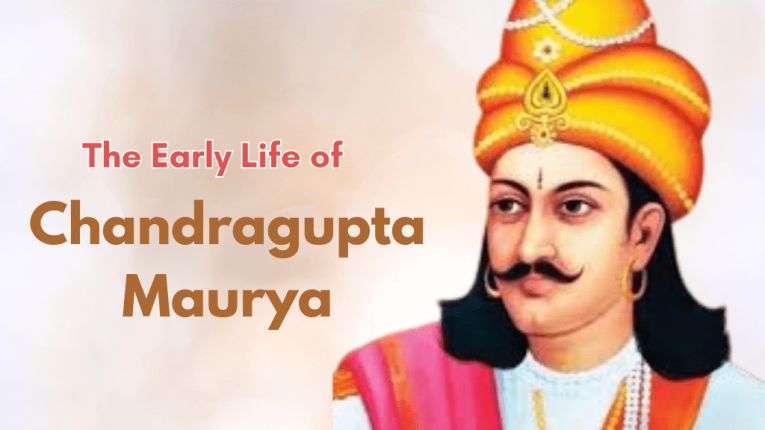
The Reign of Chandragupta Maurya
The reign of Chandragupta Maurya is particularly renowned in Indian history for empire-building, military conquests, administrative reforms, and economic development. His rule was not limited to warfare; he built a strong and well-organized administrative system that shaped India’s future governance.
Chandragupta Maurya Achievements:
- Defeated the Nanda dynasty and seized control of Magadha
- Founded the Mauryan Empire
- Defeated the Greek ruler, Seleucus I Nicator
- Expanded the empire across Northern and Western India
- Established a strong and centralized administrative system
- Constructed roads and trade routes
- Organized a vast and powerful army
- Strengthened agriculture, trade, and the economy
With the assistance of his mentor, Chanakya, Chandragupta Maurya developed a robust administrative system that encompassed a taxation framework, an espionage network, provincial administration, and the systematic management of the army. This administrative system was so effective that numerous subsequent rulers adopted this very model.
Thus, the reign of Chandragupta Maurya is regarded as immensely significant in Indian history—not solely for his conquests and wars, but also for the establishment of an organized empire, a strong administration, and economic prosperity.
The Family Life of Chandragupta Maurya
Chandragupta Maurya’s family life constitutes a significant aspect of his biography, reflecting his lineage and the grand tradition of his dynasty.
Family Details:
- Father: Not clearly known in history
- Mentor: Chanakya
- Wife: Helena (according to some historical sources, the daughter of the Greek ruler Seleucus I Nicator)
- Son: Bindusara (the next Emperor of the Mauryan Empire)
- Grandson: Ashoka (one of the greatest rulers in Indian history)
Following Chandragupta Maurya, his son Bindusara assumed the responsibility of governance and further expanded the Mauryan Empire. Subsequently, his grandson Ashoka elevated the empire to new heights and became renowned in history as a great emperor.
Thus, Chandragupta Maurya’s family life is not merely a personal matter, but also a symbol of the power, continuity, and greatness of the Mauryan dynasty.
Also read this important Topics:
Alexander Graham Bell: Biography, Inventions, Education, Awards and Interesting Facts
Who Was Jagadish Chandra Bose? His Discoveries and Contributions to Science
Who is Srinivasa Ramanujan? His Biography, Contributions & Interesting Facts
C.R. Rao Biography: Discover his legacy, awards, and mathematical accomplishments
The Death of Chandragupta Maurya
Information regarding the death of Chandragupta Maurya can be found in Jain texts. It is believed that, during the final phase of his life, he embraced Jainism and abdicated his throne in favor of his son, Bindusara. Subsequently, he traveled to South India accompanied by the Jain monk Bhadrabahu.
It is said that, at Shravanabelagola in Karnataka, he observed the Jain practice known as ‘Sallekhana’—a ritual involving the voluntary renunciation of the body through fasting. It is believed that he passed away there around 298 BCE.
Chandragupta Maurya's Legacy
Chandragupta Maurya’s legacy is considered extremely important and influential in Indian history. He not only established an empire but also laid the foundation for a strong governance, administrative system, and political unity in India. His achievements impacted generations, especially the rulers of the Maurya dynasty.
Chandragupta Maurya’s Major Legacies:
- Founder of the Maurya Dynasty
- Founder of the Maurya Empire
- Unified a large part of India under one rule
- Established a strong central administrative system
- Developed agriculture, trade, and the economy
- Builded a large and powerful army
- Developed infrastructure such as roads, cities, and irrigation
- Established an organized and strong political system
- His grandson, Ashoka, later became one of India’s greatest emperors.
Chandragupta Maurya’s greatest legacy is considered to be that he laid the foundation for a powerful and organized empire in India, on which the Maurya Empire later established its greatness. His administration, military prowess, and political acumen shaped Indian history.
Because of these achievements and contributions Chandragupta Maurya is considered one of the greatest rulers in Indian history, and his legacy remains immortal in history to this day.
Why is Chandragupta Important?
Chandragupta Maurya is important because:
- He founded the Maurya Dynasty
- He founded the Mauryan Empire
- He united India politically
- He defeated foreign rulers
- He built strong administration
- He improved trade and agriculture
- He laid the foundation for Ashoka’s empire
- He changed Indian political history
Without Chandragupta Maurya, the Maurya Empire and Ashoka’s empire would not have existed.
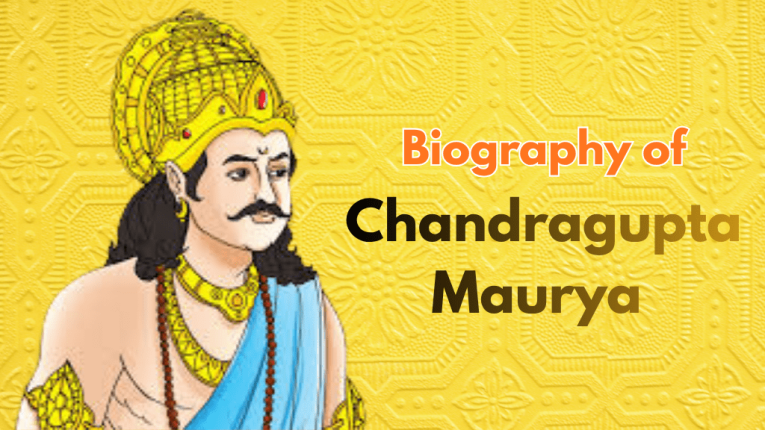
Chandragupta Maurya Biography
Summary of the Biography of Chandragupta Maurya
Chandragupta Maurya was a great emperor of ancient India and the founder of the Mauryan dynasty. A brief summary of his biography is provided below:
Brief Information:
- Birth: Circa 340 BCE
- Mentor: Chanakya
- Empire Founded: Mauryan Empire
- Reign: 322 BCE – 298 BCE
- Son: Bindusara
- Grandson: Ashoka
- Later Adopted Religion: Jainism
- Death: Circa 298 BCE
- Known As: Founder of the Mauryan Dynasty
- Legacy: The first great emperor to unify a vast territory of India under a single rule
In summary, Chandragupta Maurya was a great ruler who established the Mauryan Empire, politically unified India, and laid the foundation for a robust administrative system—achievements for which he is regarded as one of the greatest emperors in Indian history.
Conclusion
Chandragupta Maurya – Founder of the Mauryan Empire was one of the greatest rulers in Indian history. From a simple childhood to becoming the emperor of a vast empire, his life story is truly inspiring. The Biography of Chandragupta Maurya teaches us about leadership, strategy, determination, and vision.
He established the Maurya Empire, defeated powerful enemies, built a strong administration, and laid the foundation for one of the greatest empires in Indian history. His career, empire, family life, death, and legacy make him one of the most important historical figures in India.
The Legacy of Chandragupta Maurya still remains in Indian history as the man who built the first great empire of India and changed the course of history forever.